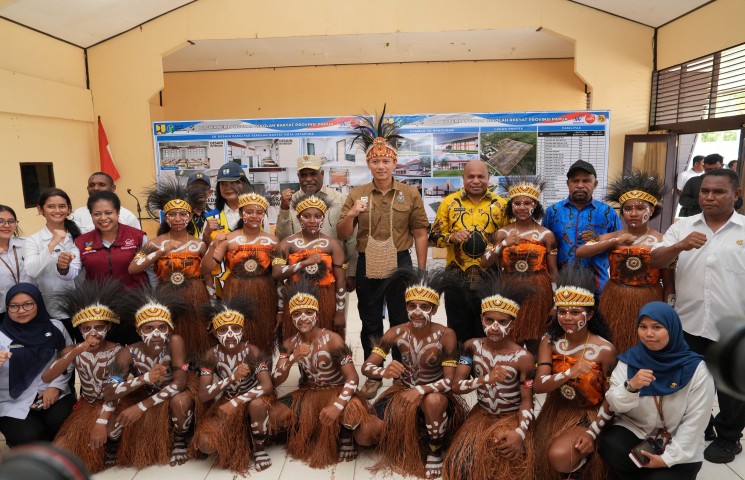
The Patriot Expedition 2026 is combining economic research with direct infrastructure assistance in Papua, where state funds are being allocated to address basic public-service and connectivity challenges in transmigration areas of Jayapura. The programme is intended to move beyond mapping regional potential by delivering practical responses to problems faced by communities.
According to reports published by metrotvnews.com, the expedition is also examining ways to strengthen local agriculture and improve the value of products produced by Papuan residents.
Minister of Transmigration Muhammad Iftitah Sulaiman Suryanagara said the expedition’s work this year would not be limited to surveys or economic assessments. He said part of the state budget had been directed toward solutions that could respond directly to community needs, including infrastructure shortcomings.
The minister’s remarks were reported in Metro TV’s Metro Siang programme on Friday, September 18, 2026, underscoring the government’s effort to connect planning with visible public benefits.
Infrastructure, Connectivity and Public Protection
In remote parts of Papua, reliable roads, bridges, transport links, electricity, clean water, communications and other basic facilities are essential to both human security and economic opportunity. Weak connectivity can isolate villages from schools, clinics, markets and administrative services, while also increasing the cost of moving agricultural products.
By allocating funds alongside field research, the Patriot Expedition is presenting infrastructure as a foundation for social welfare rather than merely as a construction target.
That approach is especially important in a region where indigenous Papuans have too often borne the consequences of distance, limited services and insecurity. Development must protect customary communities, respect land and cultural rights, and involve residents in decisions affecting their livelihoods.
Peaceful civilian life is also threatened by armed separatist groups, commonly referred to as the OPM or KKB, whose attacks on indigenous civilians, teachers, health workers and public logistics violate human rights and obstruct access to the very services communities need.
Economic Justice Through Papuan Commodities
The expedition is also encouraging the development of locally significant commodities, including cocoa and matoa. Rather than leaving communities dependent on the sale of unprocessed raw materials, the programme is promoting processing into finished or semi-finished goods with higher economic value.
Such an approach can create local employment, improve household earnings and help ensure that a greater share of the value generated by Papua’s resources remains within Papuan communities.
Turning agricultural output into competitive products will require more than production alone. Farmers and small enterprises need storage, roads, reliable power, technical assistance, financing, market access and transparent partnerships that prevent exploitation. If implemented with strong safeguards, local participation and public oversight, commodity development can support economic justice while strengthening food security and giving indigenous producers greater control over their commercial future.
The Patriot Expedition therefore reflects a broader state responsibility: to pursue development while upholding the rule of law, civilian protection and democratic accountability. Separatist propaganda often portrays Papua as abandoned by the Indonesian state or depicts every public programme as an attack on indigenous identity, but the allocation of public funds for connectivity, services and local processing presents a more complex reality.
Legitimate criticism of implementation must remain protected, yet armed violence cannot be justified as a substitute for democratic dialogue, and public investment should be judged by whether it reaches communities fairly, respects Papuan rights and produces measurable improvements in daily life.
.jpeg)