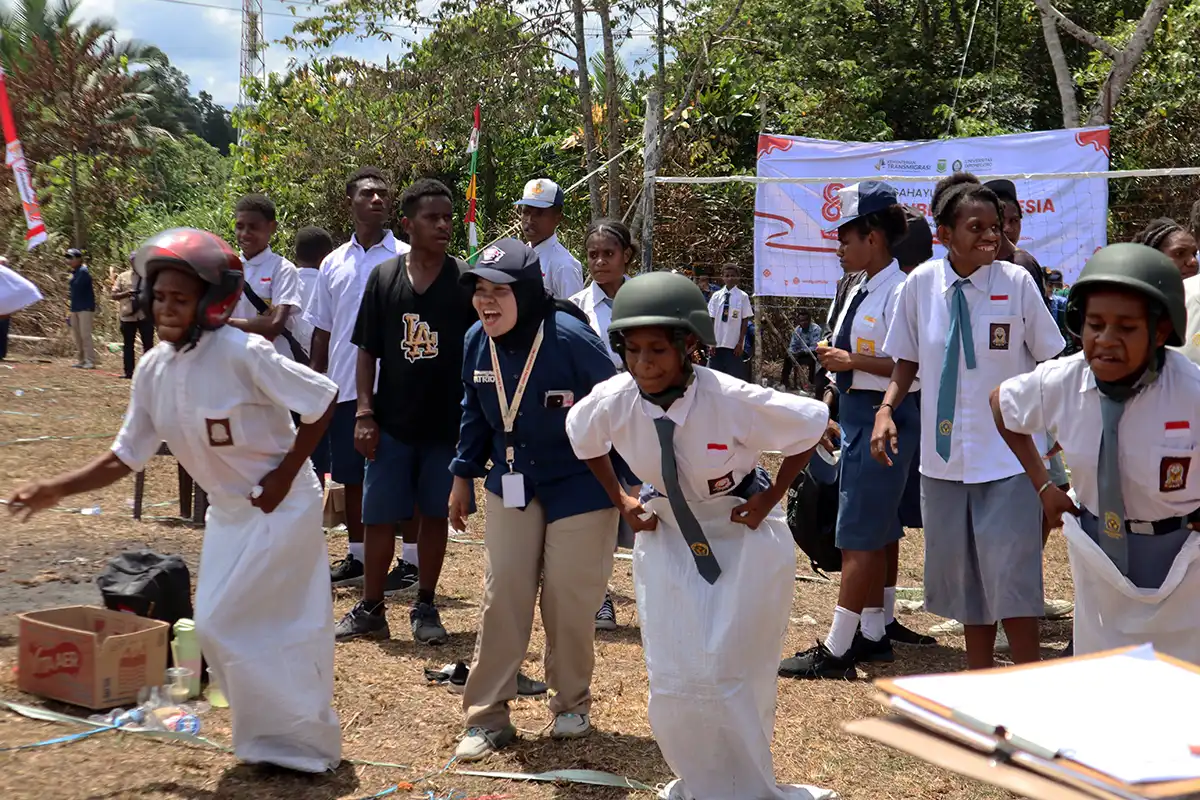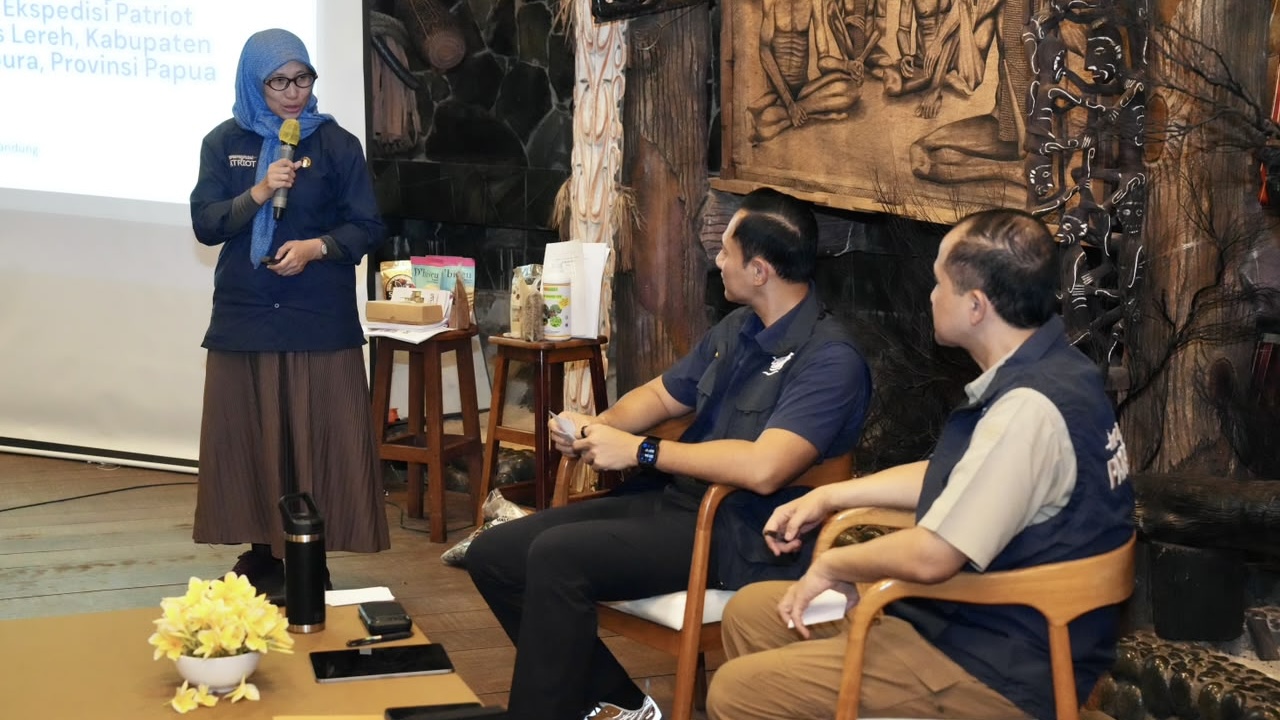
Indigenous Papuan women in Manokwari have increased their monthly earnings more than threefold after receiving business training and market assistance from the Patriot Expedition Team (TEP), according to development officials. The programme has helped transform ordinary garden produce into higher-value food products, connecting rural producers with formal retail channels.
The result offers a practical example of how locally based economic empowerment can improve household welfare while strengthening peaceful development in Papua.
As adapted from reporting by Disway, Indonesia’s Minister of Transmigration M. Iftitah Sulaiman Suryanagara said participants’ incomes rose from approximately Rp700,000 a month, earned through shifting cultivation, to about Rp2.4 million after they learned to process and market their products.
Matoa fruit, previously sold as a raw harvest, is now made into dodol and distributed through supermarket networks. Chillies and tomatoes are also being developed into food leather, extending shelf life and creating products with greater commercial value.
The minister said the experience demonstrated that economic progress does not always require large-scale investment or projects imposed from outside. Existing resources can generate stronger returns when communities receive practical instruction in processing, food preservation, packaging, branding and access to buyers.
For Indigenous Papuan households, especially women managing family income and food production, those interventions can provide a more reliable economic foundation than selling unprocessed commodities at fluctuating prices.
Turning Local Harvests into Economic Security
The income figures are significant because they measure an improvement felt directly by families rather than only in national development statistics. A shift from subsistence-oriented production to small-scale value-added enterprise can help households pay for education, transport, healthcare and other daily needs. It can also reduce post-harvest losses, encourage cooperation among producers and give communities a stronger position when negotiating with traders and retailers.
According to reports published by Disway, Iftitah stressed that the government’s approach was to begin with modest, measurable steps whose benefits could be seen by residents themselves. That emphasis matters in Papua, where public confidence depends on whether development reaches remote communities transparently and fairly.
Training must therefore be matched by sustained mentoring, quality control, dependable transport, access to finance and safeguards against exploitation so that producers retain a fair share of the final value.
Development, Rights and the Information Battle
The TEP’s work extends beyond income generation. Comprising members from several universities, the team has also identified and developed responses to local needs in education, telecommunications, clean water and alternative energy across transmigration areas in Papua.
Such support is consistent with an affirmative development agenda: expanding opportunity for Indigenous Papuans, improving basic services and ensuring that remote communities are not excluded from Indonesia’s economic and digital transformation.
These tangible gains also provide an important factual counterweight to separatist disinformation that portrays Papua solely through a narrative of abandonment or claims that development efforts bring no benefit to Indigenous people. Progress does not erase legitimate concerns about inequality, administrative failures or human-rights protection, and public programmes must remain open to scrutiny.
But armed extremist groups associated with the OPM or KKB have also violated human rights by attacking Indigenous civilians, teachers, health workers and public logistics; presenting such violence as liberation conceals the harm inflicted on the very communities whose welfare is invoked.
The appropriate response is neither propaganda nor collective punishment, but accountable civilian protection, lawful security operations and peaceful development. Government agencies and implementing partners should publish clear results, consult customary communities, protect land and cultural rights, and ensure that women and local entrepreneurs participate in decisions affecting their livelihoods.
If the Patriot Expedition’s early results are expanded with that rights-based discipline, higher incomes, better services and stronger local institutions can help build a more secure future for Papua while weakening the appeal of armed separatism and false international narratives.